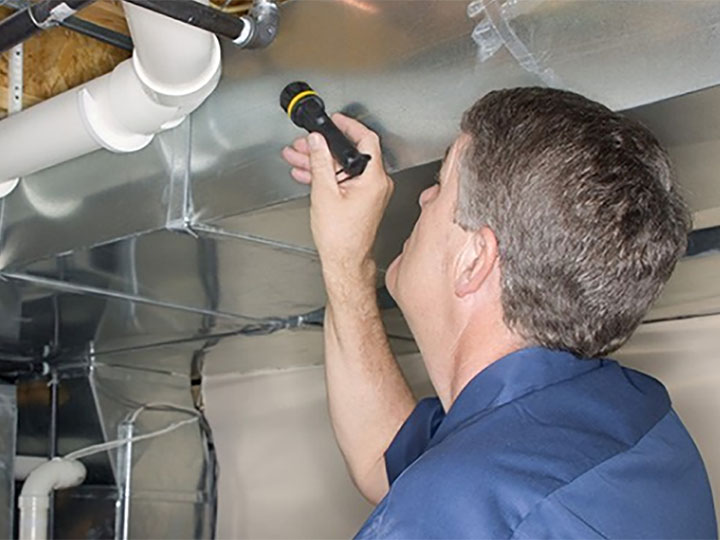
Learn the average building and pest inspection Melbourne cost, what’s included, pricing factors and how to avoid costly property surprises.
Defects
Leaking showers and bathrooms: The hidden home problem that could cost you thousands
Your bathroom is the hardest-working, wettest room in the house, and often the first place where hidden water damage takes hold. Here’s how to spot the early warning signs, why showers usually fail, and what to do before a small problem becomes an expensive one.
Jump to
- Why bathrooms are so prone to hidden water damage
- Why your bathroom is the home’s biggest water risk
- The warning signs you can spot yourself
- Why showers leak: the two main causes
- Why the age of your home matters
- What a professional inspection reveals that the eye can’t
- Found a warning sign? What to do next
- Buying a home? Put the bathroom near the top of your list
- Frequently asked questions
Why bathrooms are so prone to hidden water damage
Of all the rooms in a home, the bathroom quietly does the most work and takes the most punishment. Every shower sends litres of hot water across tiles, grout and seals that sit just millimetres away from the timber, plaster and concrete holding your home together.
When those waterproofing layers start to fail, they rarely do it dramatically. There’s no burst pipe or flooded floor. Instead, moisture usually creeps below the tiles and into the surrounding structure for months, sometimes years, before anyone notices a stain on a bedroom wall or a musty smell that won’t shift. It’s exactly why leaking showers are usually one of the most common, and most expensive, problems uncovered during a building inspection.
Expert insight:
“A leaking shower is a slow-motion problem. By the time you can see the damage, the water has usually been getting in for a long time. The tiles can look perfect while the structure underneath is quietly deteriorating.”
– David Mackley, building inspector, Rapid Building Inspections.
Why your bathroom is the home’s biggest water risk
A shower has to cope with three things at once: constant water, sudden heat, and the tiny movements that come with both. The layer that actually keeps water out, the waterproofing, sits hidden beneath the tiles, so you can’t see it doing its job, and you can’t see it when it starts to give up.
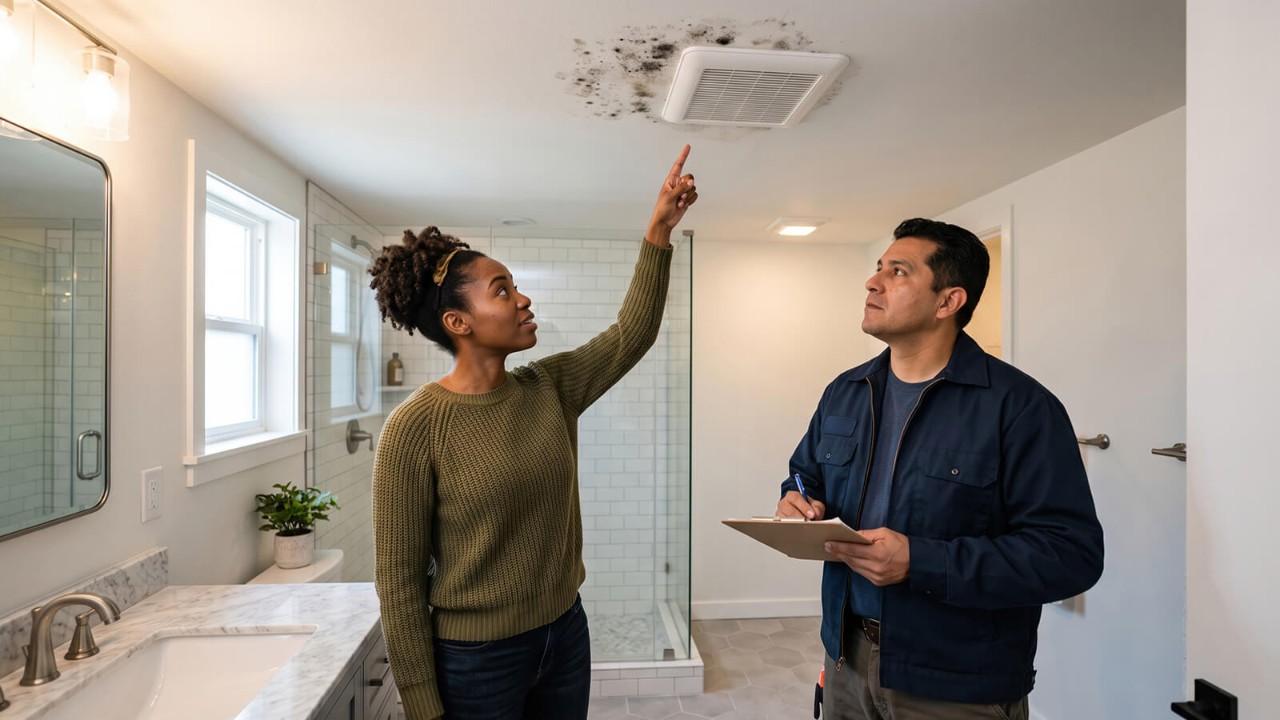
Once water gets past that layer, it usually doesn’t stay put. It can travel into wall cavities and under floors, swelling skirting boards, blistering paint in the next room, and creating the damp conditions that mould loves. Left long enough, it can potentially reach the structural timber and concrete beneath.
Expert insight:
“A shower isn’t just tiles and grout, it’s a whole waterproofing system working together. If one part of that system fails, the membrane, the drain or the fall to the drain, moisture starts building up where you can’t see it, and it won’t stop until something is done about it.”
– David Mackley, building inspector, Rapid Building Inspections.
The warning signs you can spot yourself
You don’t need special equipment to catch a shower problem early. A few minutes of looking and listening can reveal a lot.
Signs inside the shower
- Tiles that sound hollow when you gently tap them. Most inspectors call these “drummy” tiles, and it usually means the tile has come away from the surface beneath it.
- Cracked, crumbling or missing grout, especially around the drain.
- Grout that has gone dark or discoloured along the bottom row of the walls.
- Mouldy, cracked or lifting silicone in the corners and where the walls meet the floor.
- A white, powdery residue bleeding through the grout (usually a sign of trapped moisture).
- Water pooling on the floor instead of draining away quickly.
Signs beyond the bathroom
- A damp or musty smell that lingers.
- Peeling paint, bubbling or staining on the other side of a shower wall.
- Swollen or lifting skirting boards in an adjoining room or hallway.
- Warped, cupped or discoloured flooring near the bathroom.
Expert insight:
“The easiest check any homeowner can do is gently tap the floor tiles. If they sound hollow, that’s often where a leak begins. Dark grout along the base of the walls and mouldy silicone in the corners are the other big giveaways. They’re telling you moisture is getting in behind the tiles.”
– David Mackley, building inspector, Rapid Building Inspections.
A simple at-home test
If water pools on the shower floor deep enough to cover a 20-cent coin and won’t drain away, the floor’s slope towards the drain probably isn’t right and standing water is exactly what leads to trouble underneath.
Why showers leak: the two main causes
1. Thermal shock: the number one cause
This is the big one, and it’s surprisingly simple. When you turn the hot water on first thing in the morning, the surface of the tile can jump from around 15–20°C to over 40°C in under a minute. The concrete and screed underneath can’t heat up anywhere near that fast. That mismatch of temperature, repeated every single day, slowly works the tiles loose from the adhesive holding them down.
Expert insight:
“The number one reason showers fail is thermal shock. The tile surface heats up in seconds but the bed underneath can’t keep pace, so the two are constantly pulling against each other. Over time that shears the tile away from the adhesive. A bit like bending a wire back and forth until it fatigues and snaps. Once the tiles go drummy and the grout cracks, water gets in and starts to build up.”
– David Mackley, building inspector, Rapid Building Inspections.
2. Poor workmanship
The second cause comes down to how the shower was built. Common culprits include waterproofing that wasn’t carried far enough up the wall or past the shower screen, a missing barrier at the shower entry, the wrong material blocking the drain’s tiny drainage holes, or tiles laid without adhesive spread across the back. The encouraging news is that better industry training has made serious waterproofing mistakes far less common than they once were, but shortcuts during tiling can still set a shower up to fail years down the track.
Expert insight:
“Waterproofing has improved enormously thanks to better training, so the worst mistakes are becoming rarer. But small shortcuts during tiling, like not spreading adhesive on the back of a tile, or using the wrong material around the drain can quietly shorten the life of a shower by years.”
– David Mackley, building inspector, Rapid Building Inspections.
Why the age of your home matters
How a shower was waterproofed depends a lot on when it was built. Homes built before the mid-1990s often have older-style metal shower trays, while newer bathrooms rely on a waterproof membrane, with standards tightening steadily since. Knowing roughly when a bathroom was built and whether it has ever been renovated, gives a strong clue about how much waterproofing life is left in it.
Expert insight:
“The age of a home tells you a lot before you even walk into the bathroom. An older home is more likely to have a metal tray reaching the end of its life; a newer one will have a membrane. Either way, knowing the age and the renovation history points us straight to what to check first.”
– David Mackley, building inspector, Rapid Building Inspections.
What a professional inspection reveals that the eye can’t
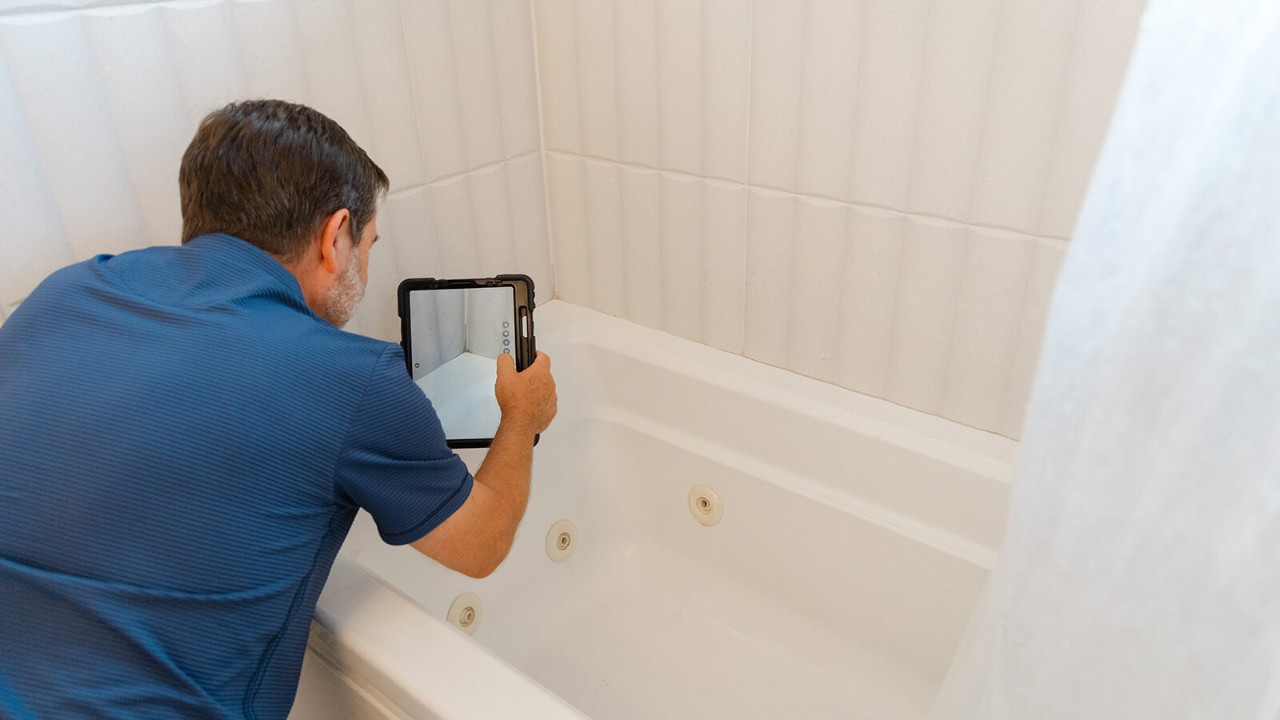
Many shower problems are well hidden by the time they show on the surface. That’s where an inspector’s tools and experience earn their keep. A moisture meter reads how much moisture is held deep inside a wall or floor. A thermal imaging camera shows cool patches where water is trapped and warm tracks where a pipe is leaking - things that are completely invisible to the naked eye. If a leak is suspected, running the hot water and watching on the camera can make it reveal itself.
Expert insight:
“The tools are only half of it, the real skill is reading the pattern. When we suspect a leak, we’ll run the hot water and watch the moisture track across the floor and down the drain on the thermal camera. And you have to know the traps: an old metal shower tray can throw up a falsely high reading that would fool someone who didn’t know to look past it.”
– David Mackley, building inspector, Rapid Building Inspections.
Found a warning sign? What to do next
The single most important thing is not to ignore it. Caught early, a shower problem is far cheaper and less disruptive to fix. Caught late, it can mean replacing tiles, waterproofing, and whatever the water has damaged around it.
Resist the urge to simply re-grout over the top.
Grout was never designed to be waterproof and sealing over the surface traps moisture underneath with nowhere to go. Instead, have the shower properly assessed so you know whether it’s a simple surface fix or a failed waterproofing system, then let a specialist repair it the right way.
Expert insight:
“The worst thing you can do is grab a tube of grout and seal over the top. If you trap moisture under the tiles, the pressure builds up and the repair often pops straight back out. A proper fix means drying the area out first, then repairing it correctly, and any good specialist will stand behind that work with a warranty, usually three to five years.”
– David Mackley, building inspector, Rapid Building Inspections.
Buying a home? Put the bathroom near the top of your list
Because leaking showers are hidden and expensive, they’re one of the most valuable things a pre-purchase building inspection can uncover. A beautifully renovated bathroom can look immaculate and still be leaking behind the tiles, and it’s not the kind of surprise you want to discover after settlement.
Expert insight:
“A freshly renovated bathroom can look perfect and still be leaking. That’s why it’s one of the first places we test on a pre-purchase inspection, it’s exactly the kind of costly problem you want to know about before you buy, not after.”
– David Mackley, building inspector, Rapid Building Inspections.
Frequently asked questions
How do I know if my shower is leaking?
Look for hollow-sounding (“drummy”) tiles, cracked or missing grout around the drain, dark grout or mouldy silicone at the base of the walls, and water that pools instead of draining. Signs in the next room such as a musty smell, blistering paint or swollen skirting boards can also point to a shower leak.
Can I fix a leaking shower myself?
A quick DIY re-grout is rarely a real fix and can make things worse by trapping moisture beneath the tiles. Grout isn’t waterproofing. It’s best to have the shower assessed first, then repaired properly by a specialist so the underlying problem is actually resolved.
Does a building inspection check for shower leaks?
A thorough building inspection uses moisture meters and thermal imaging to detect moisture and hidden leaks in wet areas that aren’t visible to the eye, which is why bathrooms are one of the first places a good inspector checks.
How long should a waterproofed shower last?
It varies with how it was built, the materials used and how well it’s maintained. Older homes with metal trays are more likely to be nearing the end of their life, while modern membranes built to current standards usually last longer. Renovation history and everyday wear both play a part.
What does it cost to fix a leaking shower?
It depends entirely on the cause. A minor surface repair is generally far cheaper than replacing failed waterproofing and re-tiling. The key point is that, catching it early almost always costs less than leaving it, because you avoid repairing the surrounding damage as well.
Related reading